banner ad
banner ad

New CSB Video Titled “Fire in the Valley” documents the Bayer Cropscience accidental explosion at Institute, W.Va. site

| March 22, 2011 | 0 Comments

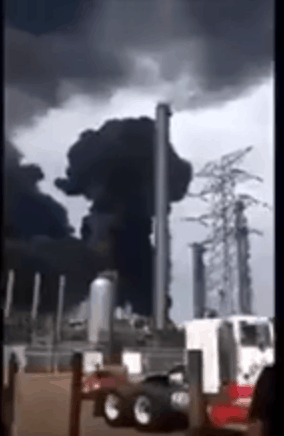
Washington, DC, March 21, 2011 – The U.S. Chemical Safety Board (CSB) today released a new safety video depicting events leading to the August 28, 2008, catastrophic explosion and fire at the Bayer CropScience facility in Institute, WV, that fatally injured two workers.

The video is entitled “Fire in the Valley,” a reference to the Kanawha River valley where numerous chemical facilities are located, including the Bayer plant that manufactures insecticides, near Charleston, West Virginia.
———–Ad———————
For easy to understand training programs on Hazardous Area Instrumentation, Safety Instrumented Systems, Gas Monitors and HAZOP, please click here
————————————
The video features a detailed computer animation showing how a series of errors and deficiencies during a lengthy startup process resulted in a runaway chemical reaction inside a residue treater pressure vessel. The CSB’s investigation found that operators were not adequately trained, new computer process equipment had not been fully checked out, and a critical safety interlock was bypassed to begin a chemical reaction.

Investigations Supervisor John Vorderbrueggen, P.E. discusses the CSB’s findings, “We found serious deficiencies in the company’s process safety management program. This resulted in a series of critical omissions during the startup that led to a runaway reaction and violent explosion.”
These events contributed to the over pressurization of the residue treater which ultimately exploded and careened into the methomyl pesticide manufacturing unit, leaving a huge fireball in its wake.  Pieces of the vessel struck a steel-mesh covering surrounding a large tank of methyl isocyanate, a highly toxic chemical of concern to residents of the valley since 1984 when an accidental release of MIC in Bhopal, India, killed thousands.
In the video, CSB Chairperson Rafael Moure-Eraso says, “The communities surrounding Bayer CropScience have been concerned for decades about the MIC stored there.  Its presence added even more gravity to the series of safety lapses the CSB investigation found to have preceded the tragedy.   And when the accident occurred, the company refused to give out critical information to responders and the public.”
Ultimately, 40,000 area residents were requested to shelter-in-place the night of the accident. The video features comments by county and state officials on the initial refusal of Bayer to provide information to Metro 911 emergency response operators as well as resident’s concerns about chemical plant safety in the area. “Fire in the Valley” also details the key CSB safety recommendation that Kanawha Valley county authorities emulate the regulatory regime of Contra Costa County, California. There, chemical process safety experts regularly inspect the multitude of facilities throughout the county in a program that is paid for by a proportional levy on the plants. The program’s director, Randy Sawyer, comments in the CSB video on the success of the program.
Chairperson Moure-Eraso concludes the video saying, “Good communications between chemical plants, responders, and community leaders can help assure the safety of workers and residents during an emergency. But preventing accidents requires companies to have effective process safety management programs. The fact that accidents continue to occur shows the need for improved inspections and oversight whether at the federal or local levels.”

Bayer Cropscience Accident at Institute- CSB issues final report

| January 21, 2011 | 0 Comments

Institute, West Virginia, January 20, 2011 – The U.S. Chemical Safety Board (CSB) today released its final report on the August 28, 2008, Bayer CropScience pesticide manufacturing unit explosion that killed two workers and injured eight others. In a report scheduled for Board consideration at a public meeting this evening in Institute, the CSB found multiple deficiencies during a lengthy startup process that resulted in a runaway chemical reaction inside a residue treater pressure vessel. The vessel ultimately over pressurized and exploded. The vessel careened into the methomyl pesticide manufacturing unit leaving a huge fireball in its wake.

—————Advt—————–
For comprehensive training on Gas Detectors, Safety Instrumented Systems, Hazardous Area Instrumentation and HAZOP study please click here.
————————————-

The report found that had the trajectory of the exploding vessel taken it in a different direction, pieces of it could have impinged upon and possibly caused a release from piping at the top of a tank of highly toxic methyl isocyanate (MIC).

(Editors Note: MIC is the same chemical that has killed thousands of people in the infamous Bhopal gas disaster. To think that it could have happened even 25 years later in the US is telling)

The accident occurred during the startup of the methomyl unit, following a lengthy period of maintenance. The CSB found the startup was begun prematurely, a result of pressures to resume production of the pesticides methomyl and Larvin, and took place before valve lineups, equipment checkouts, a pre-startup safety review, and computer calibration were complete. CSB investigators also found the company failed to perform a thorough Process Hazard Analysis, or PHA, as required by regulation.

This resulted in numerous critical omissions, including an overly complex Standard Operating Procedure (SOP) that was not reviewed and approved, incomplete operator training on a new computer control system, and inadequate control of process safeguards. A principal cause of the accident, the report states, was the intentional overriding of an interlock system that was designed to prevent adding methomyl process residue into the residue treater vessel before filling the vessel with clean solvent and heating it to the minimum safe operating temperature.

Furthermore, the investigation found that critical operating equipment and instruments were not installed before the restart, and were discovered to be missing after the startup began. Bayer’s Methomyl-Larvin unit MIC gas monitoring system was not in service as the startup ensued, yet Bayer emergency personnel presumed it was functioning and claimed no MIC was released during the incident.

Here is an animated video of the likely sequence of events that occured.

CSB Chairperson Dr. Rafael Moure-Eraso said, “The deaths of the workers as a result of this accident were all the more tragic because it could have been prevented had Bayer CropScience provided adequate training, and required a comprehensive pre-startup equipment checkout and strict conformance with appropriate startup procedures. This would have revealed multiple dangerous conditions and procedures that were occurring at a time when the company wanted to restart production of a key pesticide product. Startups are always a potentially hazardous operation, but to begin with computer control systems that have not been checked, while bypassing safety interlocks, is unacceptable.”

The investigation report makes recommendations to the company and its Institute plant, to the Occupational Safety and Health Administration (OSHA), the Environmental Protection Agency (EPA), and several West Virginia agencies. Citing a highly successful county program to ensure refinery and chemical plant safety in Contra Costa County, California, the CSB report recommends the West Virginia Department of Health and Human Resources establish a “Hazardous Chemical Release Prevention Program” that would have the authority to inspect and regulate such plants, and make public its ongoing findings.

Dr. Moure-Eraso said, “I believe a state and county-run program like this would go a long way to making chemical operations safer in places like the Kanawha Valley. OSHA and EPA, have limited resources and cannot be everywhere at once. However, local jurisdictions can put together highly effective and targeted inspection and enforcement programs, funded by levies on the plants themselves. The accident rate in Contra Costa County has dropped dramatically, and last year in fact they had no significant accidents, thanks, in my view, to this program.”

CSB Investigations Manager John Vorderbrueggen noted that a major contributing factor to the accident was a series of equipment malfunctions that continually distracted operators. “Human factors played a big part in this accident, and the absence of enforced, workable standard operating procedures and adequate safety systems meant that mistakes could prove fatal. For example, operators were troubleshooting several equipment problems and during the startup, inadvertently failed to prefill the residue treater vessel with solvent. A safety interlock was designed to stop workers from introducing highly-reactive methomyl, but it was bypassed as had been done in previous operations with managers’ knowledge. Once the chemical reaction of the highly concentrated methomyl started, it could not be stopped, and the temperature and pressure inside rose rapidly, finally causing an explosion.”

bayercropscience_csb_investigation_MIC

Board Member John Bresland, who was CSB chairman at the time of the Bayer accident, noted the confusion that resulted in the community’s emergency response following the explosion at 10:33 p.m. “The Bayer fire brigade was at the scene in minutes, but Bayer management withheld information from the county emergency response agencies that were desperate for information about what happened, what chemicals were possibly involved,” Mr. Bresland said. “The Bayer incident commander, inside the plant, recommended a shelter in place; but this was never communicated to 911 operators. After an hour of being refused critical information, local authorities ordered a shelter-in-place, as a precaution.”

“Proper communication between companies and emergency responders during an accident is critical,” said Mr. Bresland, adding, “The community deserved better, especially considering the amounts of hazardous chemicals, in use and being stored at various chemical facilities in the Kanawha River valley.

The CSB report notes that two workers and four volunteer firefighters required examination for possible exposure to toxic chemicals.

The investigation examined the potential consequences of a hypothetical trajectory of the careening residue treater vessel that would result in its hitting the heavy steel mesh ballistic shield surrounding the above-ground MIC tank. The analysis – using blast pressure and impact energy calculations – concluded that the shield would have protected the MIC tank from a residue treater vessel hit. However, the CSB found, had the residue treater struck the shield structure near the top of the frame, the displaced frame could have contacted an MIC pipe, which might have resulted in an MIC release into the atmosphere.

Chairperson Moure-Eraso said, “Any significant MIC release into the atmosphere along the Kanawha valley could have proven deadly, and that concern has been legitimately expressed for decades in the community. This potential was reduced when Bayer announced last year it would no longer store MIC above ground; it will be reduced to zero in approximately 18 months when the company has announced it will end MIC production and use at the Institute facility – the only place in the country still storing large quantities of MIC.”

Dr. Moure-Eraso continued, “Bayer’s decision to end pesticide production using MIC was, I understand, done for its own business reasons. But for whatever reasons, the eventual elimination of this chemical will enhance safety in the Kanawha Valley, for workers and residents alike, and is a positive development in my view.”

Rss Feed Tweeter button Facebook button Technorati button Reddit button Linkedin button Webonews button Delicious button Digg button Stumbleupon button Youtube button