New Safety Video on “Hazards of Hot work” in chemical plants
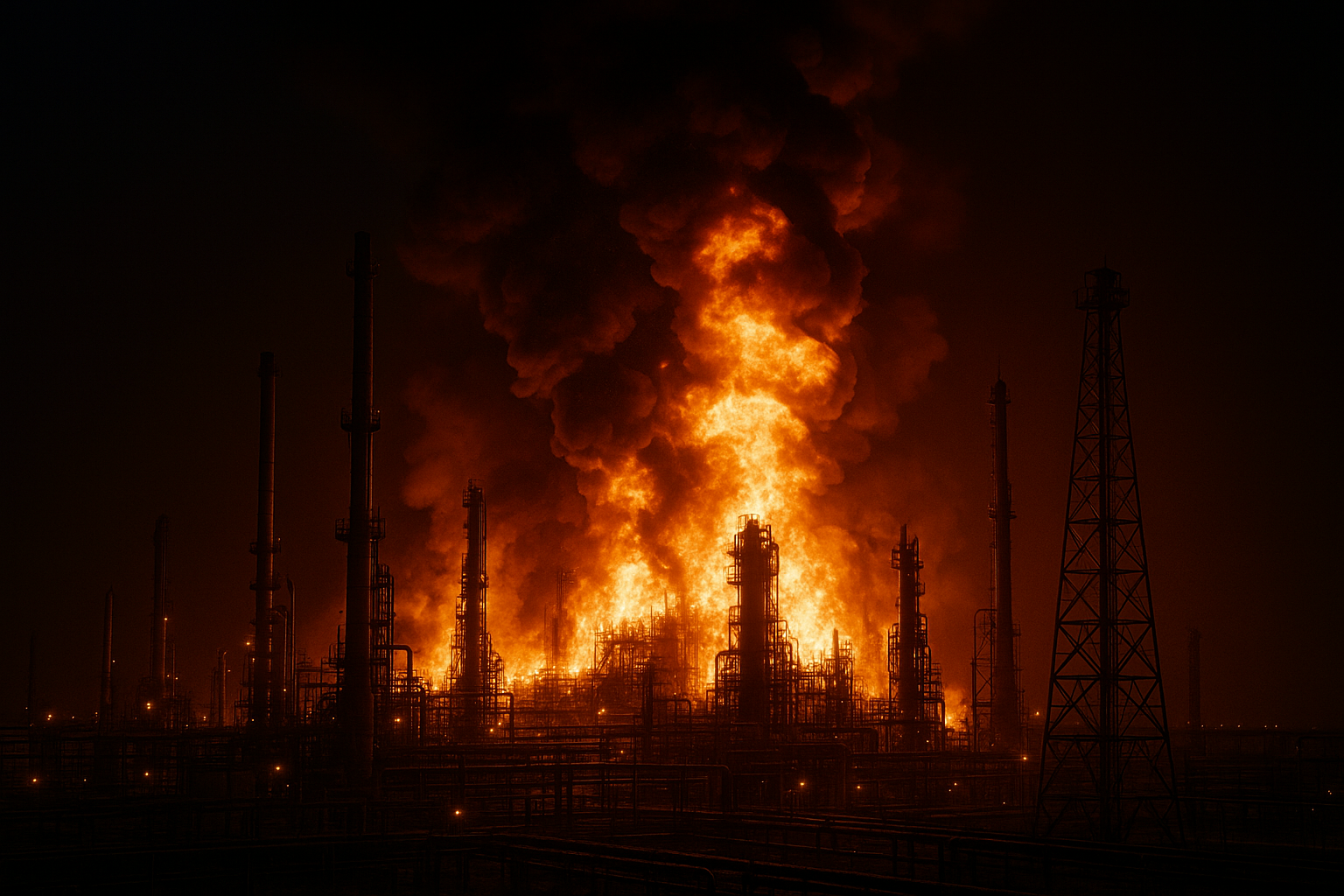
Washington DC, April 20, 2012 – The U.S. Chemical Safety Board (CSB) today released anew safety video detailing a fatal 2010 hot work accident that occurred at the DuPont facility near Buffalo, New York.
In the video, Dr. Moure-Eraso notes that, “The tragic explosion at the DuPont facility exposed weaknesses in how process hazards were analyzed and controlled. The result was the death of a welder in a preventable hot work accident.” In the video Chairperson Moure-Eraso emphasizes that hot work is often seen as a routine activity, but it can prove deadly if fire and explosion hazards are overlooked.”
To understand how Gas Monitors are used to protect plant assets, people and the environment, why don’t you download the Gas Monitors training course today? Learn all about selection of gas monitors and gas detectors, principles of operation, how to calibrate and maintain them and much more. Also get a free Certification of Competency if you pass the online test. Find out more.
New CSB Video Titled “Fire in the Valley” documents the Bayer Cropscience accidental explosion at Institute, W.Va. site
Washington, DC, March 21, 2011 – The U.S. Chemical Safety Board (CSB) today released a new safety video depicting events leading to the August 28, 2008, catastrophic explosion and fire at the Bayer CropScience facility in Institute, WV, that fatally injured two workers.
The video is entitled “Fire in the Valley,” a reference to the Kanawha River valley where numerous chemical facilities are located, including the Bayer plant that manufactures insecticides, near Charleston, West Virginia.
———–Ad———————
For easy to understand training programs on Hazardous Area Instrumentation, Safety Instrumented Systems, Gas Monitors and HAZOP, please click here
————————————
The video features a detailed computer animation showing how a series of errors and deficiencies during a lengthy startup process resulted in a runaway chemical reaction inside a residue treater pressure vessel. The CSB’s investigation found that operators were not adequately trained, new computer process equipment had not been fully checked out, and a critical safety interlock was bypassed to begin a chemical reaction.
Investigations Supervisor John Vorderbrueggen, P.E. discusses the CSB’s findings, “We found serious deficiencies in the company’s process safety management program. This resulted in a series of critical omissions during the startup that led to a runaway reaction and violent explosion.”
These events contributed to the over pressurization of the residue treater which ultimately exploded and careened into the methomyl pesticide manufacturing unit, leaving a huge fireball in its wake. Pieces of the vessel struck a steel-mesh covering surrounding a large tank of methyl isocyanate, a highly toxic chemical of concern to residents of the valley since 1984 when an accidental release of MIC in Bhopal, India, killed thousands.
In the video, CSB Chairperson Rafael Moure-Eraso says, “The communities surrounding Bayer CropScience have been concerned for decades about the MIC stored there. Its presence added even more gravity to the series of safety lapses the CSB investigation found to have preceded the tragedy. And when the accident occurred, the company refused to give out critical information to responders and the public.”
Ultimately, 40,000 area residents were requested to shelter-in-place the night of the accident. The video features comments by county and state officials on the initial refusal of Bayer to provide information to Metro 911 emergency response operators as well as resident’s concerns about chemical plant safety in the area. “Fire in the Valley” also details the key CSB safety recommendation that Kanawha Valley county authorities emulate the regulatory regime of Contra Costa County, California. There, chemical process safety experts regularly inspect the multitude of facilities throughout the county in a program that is paid for by a proportional levy on the plants. The program’s director, Randy Sawyer, comments in the CSB video on the success of the program.
Chairperson Moure-Eraso concludes the video saying, “Good communications between chemical plants, responders, and community leaders can help assure the safety of workers and residents during an emergency. But preventing accidents requires companies to have effective process safety management programs. The fact that accidents continue to occur shows the need for improved inspections and oversight whether at the federal or local levels.”
Bayer Cropscience Accident at Institute- CSB issues final report
Institute, West Virginia, January 20, 2011 – The U.S. Chemical Safety Board (CSB) today released its final report on the August 28, 2008, Bayer CropScience pesticide manufacturing unit explosion that killed two workers and injured eight others. In a report scheduled for Board consideration at a public meeting this evening in Institute, the CSB found multiple deficiencies during a lengthy startup process that resulted in a runaway chemical reaction inside a residue treater pressure vessel. The vessel ultimately over pressurized and exploded. The vessel careened into the methomyl pesticide manufacturing unit leaving a huge fireball in its wake.
—————Advt—————–
For comprehensive training on Gas Detectors, Safety Instrumented Systems, Hazardous Area Instrumentation and HAZOP study please click here.
————————————-
The report found that had the trajectory of the exploding vessel taken it in a different direction, pieces of it could have impinged upon and possibly caused a release from piping at the top of a tank of highly toxic methyl isocyanate (MIC).
(Editors Note: MIC is the same chemical that has killed thousands of people in the infamous Bhopal gas disaster. To think that it could have happened even 25 years later in the US is telling)
The accident occurred during the startup of the methomyl unit, following a lengthy period of maintenance. The CSB found the startup was begun prematurely, a result of pressures to resume production of the pesticides methomyl and Larvin, and took place before valve lineups, equipment checkouts, a pre-startup safety review, and computer calibration were complete. CSB investigators also found the company failed to perform a thorough Process Hazard Analysis, or PHA, as required by regulation.
This resulted in numerous critical omissions, including an overly complex Standard Operating Procedure (SOP) that was not reviewed and approved, incomplete operator training on a new computer control system, and inadequate control of process safeguards. A principal cause of the accident, the report states, was the intentional overriding of an interlock system that was designed to prevent adding methomyl process residue into the residue treater vessel before filling the vessel with clean solvent and heating it to the minimum safe operating temperature.
Furthermore, the investigation found that critical operating equipment and instruments were not installed before the restart, and were discovered to be missing after the startup began. Bayer’s Methomyl-Larvin unit MIC gas monitoring system was not in service as the startup ensued, yet Bayer emergency personnel presumed it was functioning and claimed no MIC was released during the incident.
Here is an animated video of the likely sequence of events that occured.
CSB Chairperson Dr. Rafael Moure-Eraso said, “The deaths of the workers as a result of this accident were all the more tragic because it could have been prevented had Bayer CropScience provided adequate training, and required a comprehensive pre-startup equipment checkout and strict conformance with appropriate startup procedures. This would have revealed multiple dangerous conditions and procedures that were occurring at a time when the company wanted to restart production of a key pesticide product. Startups are always a potentially hazardous operation, but to begin with computer control systems that have not been checked, while bypassing safety interlocks, is unacceptable.”
The investigation report makes recommendations to the company and its Institute plant, to the Occupational Safety and Health Administration (OSHA), the Environmental Protection Agency (EPA), and several West Virginia agencies. Citing a highly successful county program to ensure refinery and chemical plant safety in Contra Costa County, California, the CSB report recommends the West Virginia Department of Health and Human Resources establish a “Hazardous Chemical Release Prevention Program” that would have the authority to inspect and regulate such plants, and make public its ongoing findings.
Dr. Moure-Eraso said, “I believe a state and county-run program like this would go a long way to making chemical operations safer in places like the Kanawha Valley. OSHA and EPA, have limited resources and cannot be everywhere at once. However, local jurisdictions can put together highly effective and targeted inspection and enforcement programs, funded by levies on the plants themselves. The accident rate in Contra Costa County has dropped dramatically, and last year in fact they had no significant accidents, thanks, in my view, to this program.”
CSB Investigations Manager John Vorderbrueggen noted that a major contributing factor to the accident was a series of equipment malfunctions that continually distracted operators. “Human factors played a big part in this accident, and the absence of enforced, workable standard operating procedures and adequate safety systems meant that mistakes could prove fatal. For example, operators were troubleshooting several equipment problems and during the startup, inadvertently failed to prefill the residue treater vessel with solvent. A safety interlock was designed to stop workers from introducing highly-reactive methomyl, but it was bypassed as had been done in previous operations with managers’ knowledge. Once the chemical reaction of the highly concentrated methomyl started, it could not be stopped, and the temperature and pressure inside rose rapidly, finally causing an explosion.”
Board Member John Bresland, who was CSB chairman at the time of the Bayer accident, noted the confusion that resulted in the community’s emergency response following the explosion at 10:33 p.m. “The Bayer fire brigade was at the scene in minutes, but Bayer management withheld information from the county emergency response agencies that were desperate for information about what happened, what chemicals were possibly involved,” Mr. Bresland said. “The Bayer incident commander, inside the plant, recommended a shelter in place; but this was never communicated to 911 operators. After an hour of being refused critical information, local authorities ordered a shelter-in-place, as a precaution.”
“Proper communication between companies and emergency responders during an accident is critical,” said Mr. Bresland, adding, “The community deserved better, especially considering the amounts of hazardous chemicals, in use and being stored at various chemical facilities in the Kanawha River valley.
The CSB report notes that two workers and four volunteer firefighters required examination for possible exposure to toxic chemicals.
The investigation examined the potential consequences of a hypothetical trajectory of the careening residue treater vessel that would result in its hitting the heavy steel mesh ballistic shield surrounding the above-ground MIC tank. The analysis – using blast pressure and impact energy calculations – concluded that the shield would have protected the MIC tank from a residue treater vessel hit. However, the CSB found, had the residue treater struck the shield structure near the top of the frame, the displaced frame could have contacted an MIC pipe, which might have resulted in an MIC release into the atmosphere.
Chairperson Moure-Eraso said, “Any significant MIC release into the atmosphere along the Kanawha valley could have proven deadly, and that concern has been legitimately expressed for decades in the community. This potential was reduced when Bayer announced last year it would no longer store MIC above ground; it will be reduced to zero in approximately 18 months when the company has announced it will end MIC production and use at the Institute facility – the only place in the country still storing large quantities of MIC.”
Dr. Moure-Eraso continued, “Bayer’s decision to end pesticide production using MIC was, I understand, done for its own business reasons. But for whatever reasons, the eventual elimination of this chemical will enhance safety in the Kanawha Valley, for workers and residents alike, and is a positive development in my view.”
BP releases investigation report into Deepwater Horizon accident
Sep 09, 2010- BP released their own internal investigation report yesterday into the Deepwater Horizon oil rig explosion, fire, sinking and then massive oil spill caused by the rupturing of the pipeline riser several thousand meters below the ocean surface of the Macondo well. However, there is no one cause that has been listed, but rather several contributing causes have been mentioned. Some of the key noteworthy points in the report are listed below.
Our own comments are highlighted below (in bold italics).
1. Weaknesses in cement design and testing.
2. Failure of the shoe-track barrier in isolating hydrocarbons. The investigation team has reportedly found some clues that identify how the shoetrack cement and the float collar allowed hydrocarbon ingress into the production casing.
3. Acceptance of the negative pressure test before establishing the well integrity-here BP has pointed fingers at the Transocean rig crew as well as at BP’s own rig leadership which “incorrectly” interpreted the test results.
4. Influx was not recognized until the hydrocarbons were in the riser.Apparently almost 40 minutes before the crew started taking action, increase in drill pipe pressure data could be seen-which was not apparently noticed.
5. Wrong actions on diverting the fluids exiting the riser to the Mud-Gas separator, rather than to the overboard diverter line.
6. Once diverted to the Mud-Gas Separator, the fluids got vented onto the rig itself, where it these fluids may have found an ignition source and exploded
7. Failure of the Fire & Gas System to prevent ignition-this point seems a bit debatable, because an F & G system cannot “prevent” a fire from occuring really- all it does it to measure any gas leaks or fires and extinguish them. Apparently the hydrocarbons went into unclassified areas like engine rooms where it could find potential sources of ignition.
Incidentally this is a similar phenomenon that was observed in the infamous Buncefield, UK accident where a large explosion took place.
8. Lastly the Blow Out Preventer (BOP) did not seal the well. The control pods that were supposed to act did not work, a guess is that they got damaged due to the fire and explosion. Consequently a critical solenoid operated valve did not operate. What is more startling and damning however, is that the control pod batteries had inadequate charging, due to which the Solenoid valve did not operate-this is most certainly an oversight by the maintenance personnel who were in charge of the Control & Instrumentation systems on the rig.
Finally the report mentioned that the investigation revealed potential weaknesses in the inspection and maintenance regimes.
Though there will be several more investigation reports from different agencies like the Coast Guard, the US Chemical Safety Board and others, the initial BP investigation does seem to have covered a lot of ground. It raises questions about hazardous area classification, especially on an oil rig where the classification of areas that are classified and “safe” or “non-hazardous” seems a bit arbitrary. If one cannot know which areas of the rig would have the presence of hydrocarbons then there is no point in classifying-one should designate all areas as hazardous, although with different risk profiles such as Zone 1, Zone 2 and so on.
We’re sure this is not the last that would be written on this subject, but it gives a good idea of the importance of two subjects-hazardous area classification and gas monitors
Have a look at the excellent training resources for both of these crucial topics here.
Xcel Energy Confined Space Accident-Chemical Safety Board releases report
Denver, Colorado, August 25, 2010—The tragic accident that took the lives of five industrial painting contractors deep inside an Xcel Energy hydroelectric plant tunnel in Georgetown, Colorado, was the result of several vital safety failures, the U.S. Chemical Safety Board (CSB) determined in a final investigation report issued today in Denver.
Nationally, the investigation identified 53 serious flammable atmosphere confined space accidents that occurred from 1993 to April 2010, causing 45 fatalities and 54 injuries, the majority since 2001.
(Note: Have a look at the training program below for Confined Space Entry Training)
The CSB also released a 15-minute safety video entitled “No Escape: Dangers of Confined Spaces,” which includes a detailed animation depicting the horrible tragedy that unfolded inside the mountain tunnel at Xcel’s Cabin Creek plant on October 2, 2007.
Here’s the video. Very graphic!
The accident occurred in the water tunnel, or penstock, of the hydroelectric plant, located 45 miles west of Denver. The penstock carries water from an upper reservoir to a lower one, driving power turbines. The painting contractors, from RPI Coating, Inc., were recoating a 1,530-foot steel portion of the 4,300-foot penstock when a flash fire suddenly erupted as the vapor from flammable solvent, used to clean the epoxy spraying wands, ignited, probably from a static spark in the vicinity of the spraying machine. The initial fire quickly grew, igniting additional buckets of the solvent, methyl ethyl ketone (MEK), and other combustible epoxy materials stored nearby.
The CSB concluded the causes of the accident included (1) a lack of planning and training for hazardous work by Xcel and its contractor, RPI Coating, Inc., (2) Xcel’s selection of RPI despite its h aving the lowest possible safety rating (zero) among competing contractors, and (3) allowing volatile flammable liquids to be introduced into a permit-required confined space without necessary special precautions.
The CSB report found that the permit-required confined space rule set by the U.S. Occupational Health and Safety Administration (OSHA) does not prohibit entry or work in confined spaces where the concentration of flammable vapor exceeds ten percent of the chemical’s lower explosive limit, or LEL. (The LEL is the concentration of vapor in air below which ignition will not occur.)
OSHA’s rule does state that an atmosphere exceeding ten percent of the LEL creates an atmosphere “immediately dangerous to life and health” and that steps should be taken to define safe entry conditions; however, the rule does not define what those safe entry conditions should be or specifically prohibit entry into such hazardous atmospheres, the report notes. The CSB recommended OSHA establish a fixed maximum percentage of the LEL for entry so that work in potentially flammable atmospheres would be prohibited.
(Note: For an excellent training program on how to select and use LEL gas monitors, for combustible gas detection, please see this)
Additionally, the Board made recommendations to the company, the governor of Colorado, the Colorado Public Utilities Commission, trade groups, and other organizations.
CSB Board Member William B. Wark said, “This tragedy should never have happened. The companies did not effectively plan for the dangers of bringing significant amounts of flammable liquids into the tunnel, which was a hazardous confined space. Doing so was an unacceptable deviation from good safety practices.”
There were ten workers in the tunnel and one at the entrance at the time of the fire. Five were unable to get around the fire on the painting platform to get to the only available exit – the improvised tunnel entrance. Five workers on the other side of the platform made it to safety, although three of those workers sustained injuries.
The CSB found that Xcel and RPI failed to have technically-qualified confined space rescue crews immediately standing by at the penstock in case of emergency, as required by regulations. Workers called 911 for help but responders entering the penstock had to retreat in the thick smoke, as did workers who had approached the fire with extinguishers.
The closest confined space technical rescue unit – equipped and trained to enter the smoke-filled tunnel – was approximately one hour and 15 minutes away. The trapped workers died about one hour before this response unit arrived, their escape blocked by a steep vertical section of the tunnel deep inside the mountain.
CSB Investigations Supervisor Don Holmstrom, who led the investigation, said, “The five trapped workers communicated with co-workers and emergency responders using handheld radios for approximately 45 minutes, desperately calling for help, before succumbing to smoke inhalation. Their lives likely could have been saved had qualified, company-provided rescuers been in a position to respond immediately to a fire or other emergency.”
Board Member Mark Griffon, joining Mr. Wark and Mr. Holmstrom at the news conference, said, “Even before the operation began, the stage was set for disaster. Xcel not only did not adequately plan for the operation, but it selected the painting contractor with the lowest possible safety rating among the bidders, and it did so mostly on the basis of cost – it was the lowest bid.”
The investigation found that Xcel hoped to compensate for RPI’s safety record by closely supervising the contract work, but did not do so even when the company learned of safety issues during the initial penstock work.
The CSB investigation found Xcel and RPI managers were aware of the plan to operate the epoxy sprayer in the tunnel and to use flammable solvent to clean the sprayer and other equipment.
Mr. Holmstrom said, “As a result of not performing a hazard evaluation of the work to be done, the companies failed to identify serious safety hazards involving use of flammable liquids within the confined space. Use of safer, nonflammable solvents was not evaluated, continuous air monitoring was not required, and key policies and permit forms did not establish a percentage limit for flammable vapor in the tunnel atmosphere.”
Board Member Wark noted the lack of planning for escape in an emergency. “The penstock had only one egress point – the tunnel entrance,” he said. “Xcel and RPI did actually identify this as a major concern in their planning. But despite this, no plans were made for prompt rescue in an emergency, and no rescuers qualified to enter this confined-space environment were standing by.”
The CSB investigation determined that while companies are required to perform a hazard analysis prior to issuing permits for work in confined spaces, regulatory standards pertaining to the use of flammables within confined spaces are inadequate.
Board Member Griffon stated, “Other OSHA regulations on confined and enclosed spaces – for example in the maritime industry and other sectors – prohibit work in such confined spaces above a specific percentage of the LEL, often ten percent. We are recommending that OSHA adopt such enforceable limits for all industry.”
The CSB recommended that OSHA amend its confined space rule to establish a maximum percentage substantially below the lower explosive limit for any given flammable for safe entry and occupancy while working.
The CSB made recommendations to nine other entities. These included that the governor implement an accredited firefighter certification program for technical rescue with specialty areas including confined space rescue; that the Colorado Public Utilities Commission (PUC) require regulated utilities to adopt provisions for selecting contractors based on safety performance measures and qualifications; and that the PUC require utilities to investigate all incidents resulting in death, serious injury or significant property damage and submit and make public written findings and recommendations within one year of the accident.
Numerous recommendations were made to RPI Coating, particularly aimed at revising its confined space entry program and guidance.
CSB investigators and board members cited difficulties encountered in the investigation resulting from efforts by Xcel Energy and RPI Coating to impede the investigation and prevent the release of the investigation report.
Citing a formal Letter of Admonishment sent to the Xcel chief executive officer earlier in the week, Board Member Wark said, “The lack of cooperation and efforts by Xcel to impede our investigation are unprecedented. Mr. Griffon and I join our chairman in criticizing these actions in the strongest terms.”
The letter, signed by CSB Chairperson Rafael Moure-Eraso, states Xcel Energy did not fully comply with CSB requests for documents or answers to questions in formal interrogatories. This required the CSB to seek assistance from the U.S. Attorney’s office in Denver, resulting in delays to the investigation and additional costs to taxpayers. In May, Xcel took the extraordinary and unprecedented step of going to federal court seeking to block release of the CSB report and the safety video. The court sided with the CSB in favor of release.
Xcel was given an advanced draft copy of the report last April for review for accuracy and for confidential business information in accordance with CSB review protocols. Xcel never responded, but in August 2010, contrary to the conditions of confidentiality attached to their receiving this preliminary copy, released it to a news organization.
The letter from Chairperson Moure to Xcel’s CEO concludes, “In light of this disappointing pattern of corporate conduct, I am writing you directly to ensure that you are personally aware of the actions taken by Xcel to delay the CSB investigation, block publication of the CSB final report, and distort the conclusions of the investigation by releasing an unauthorized draft copy of the CSB report. The CSB will issue a formal recommendation that Xcel shareholders be directly notified by management of the significant findings and recommendations of the CSB report, and of the actions Xcel management intends to take to implement needed safety improvements. In the wake of the corporate responsibility concerns raised by the Big Branch Mine accident in West Virginia and the disaster in the Gulf of Mexico, I strongly urge Xcel to renew its focus on safety and to swiftly implement the CSB’s recommendations.”