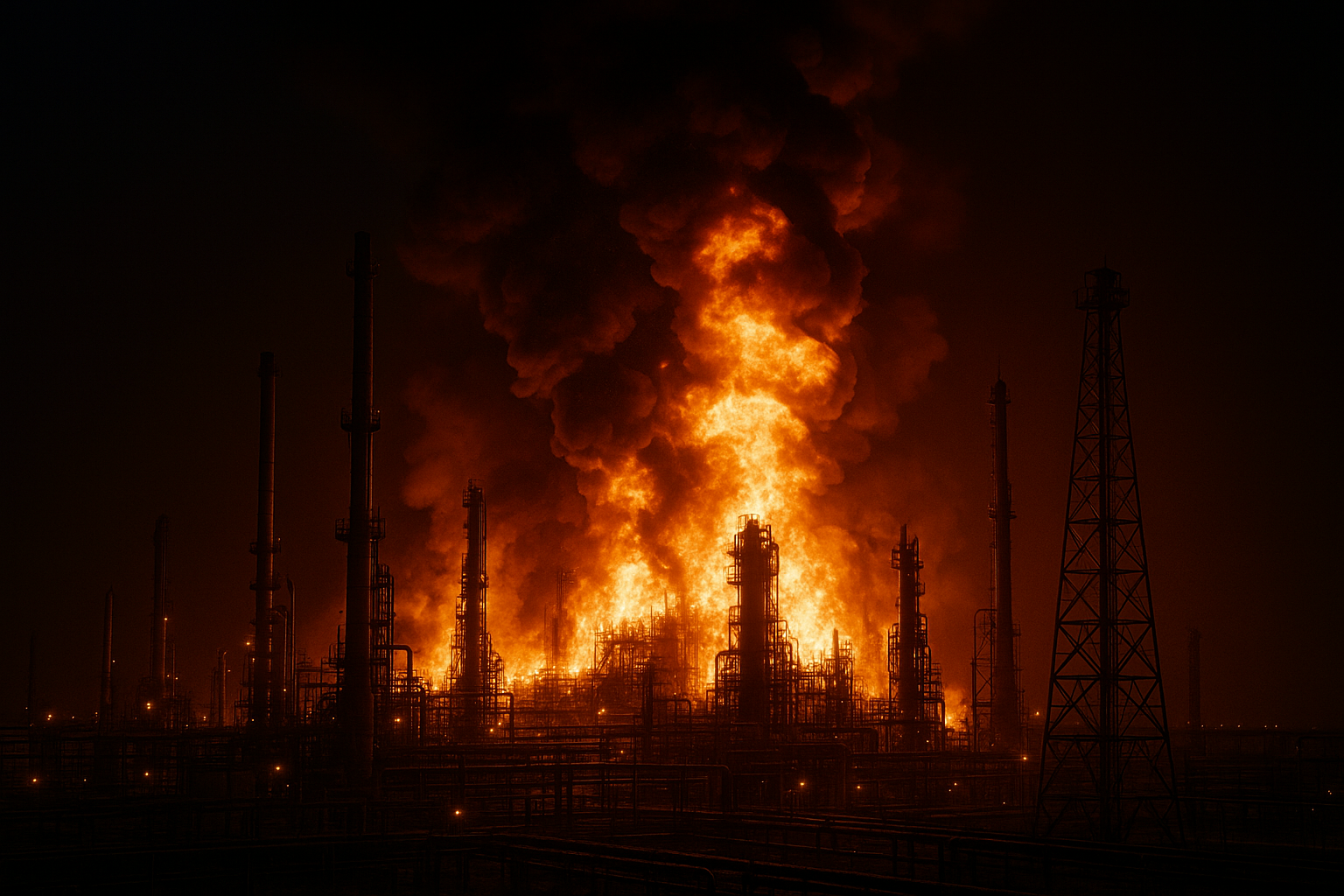
Xcel Energy Confined Space Accident-Chemical Safety Board releases report

By Rick | Aug 26, 2010

Denver, Colorado, August 25, 2010—The tragic accident that took the lives of five industrial painting contractors deep inside an Xcel Energy hydroelectric plant tunnel in Georgetown, Colorado, was the result of several vital safety failures, the U.S. Chemical Safety Board (CSB) determined in a final investigation report issued today in Denver.
Nationally, the investigation identified 53 serious flammable atmosphere confined space accidents that occurred from 1993 to April 2010, causing 45 fatalities and 54 injuries, the majority since 2001.

(Note: Have a look at the training program below for Confined Space Entry Training)

The CSB also released a 15-minute safety video entitled “No Escape: Dangers of Confined Spaces,” which includes a detailed animation depicting the horrible tragedy that unfolded inside the mountain tunnel at Xcel’s Cabin Creek plant on October 2, 2007.

Here’s the video. Very graphic!

The accident occurred in the water tunnel, or penstock, of the hydroelectric plant, located 45 miles west of Denver. The penstock carries water from an upper reservoir to a lower one, driving power turbines. The painting contractors, from RPI Coating, Inc., were recoating a 1,530-foot steel portion of the 4,300-foot penstock when a flash fire suddenly erupted as the vapor from flammable solvent, used to clean the epoxy spraying wands, ignited, probably from a static spark in the vicinity of the spraying machine. The initial fire quickly grew, igniting additional buckets of the solvent, methyl ethyl ketone (MEK), and other combustible epoxy materials stored nearby.

The CSB concluded the causes of the accident included (1) a lack of planning and training for hazardous work by Xcel and its contractor, RPI Coating, Inc., (2) Xcel’s selection of RPI despite its h aving the lowest possible safety rating (zero) among competing contractors, and (3) allowing volatile flammable liquids to be introduced into a permit-required confined space without necessary special precautions.

The CSB report found that the permit-required confined space rule set by the U.S. Occupational Health and Safety Administration (OSHA) does not prohibit entry or work in confined spaces where the concentration of flammable vapor exceeds ten percent of the chemical’s lower explosive limit, or LEL. (The LEL is the concentration of vapor in air below which ignition will not occur.)

OSHA’s rule does state that an atmosphere exceeding ten percent of the LEL creates an atmosphere “immediately dangerous to life and health” and that steps should be taken to define safe entry conditions; however, the rule does not define what those safe entry conditions should be or specifically prohibit entry into such hazardous atmospheres, the report notes. The CSB recommended OSHA establish a fixed maximum percentage of the LEL for entry so that work in potentially flammable atmospheres would be prohibited.

(Note: For an excellent training program on how to select and use LEL gas monitors, for combustible gas detection, please see this)

Additionally, the Board made recommendations to the company, the governor of Colorado, the Colorado Public Utilities Commission, trade groups, and other organizations.

CSB Board Member William B. Wark said, “This tragedy should never have happened. The companies did not effectively plan for the dangers of bringing significant amounts of flammable liquids into the tunnel, which was a hazardous confined space. Doing so was an unacceptable deviation from good safety practices.”

There were ten workers in the tunnel and one at the entrance at the time of the fire. Five were unable to get around the fire on the painting platform to get to the only available exit – the improvised tunnel entrance. Five workers on the other side of the platform made it to safety, although three of those workers sustained injuries.

The CSB found that Xcel and RPI failed to have technically-qualified confined space rescue crews immediately standing by at the penstock in case of emergency, as required by regulations. Workers called 911 for help but responders entering the penstock had to retreat in the thick smoke, as did workers who had approached the fire with extinguishers.

The closest confined space technical rescue unit – equipped and trained to enter the smoke-filled tunnel – was approximately one hour and 15 minutes away. The trapped workers died about one hour before this response unit arrived, their escape blocked by a steep vertical section of the tunnel deep inside the mountain.

CSB Investigations Supervisor Don Holmstrom, who led the investigation, said, “The five trapped workers communicated with co-workers and emergency responders using handheld radios for approximately 45 minutes, desperately calling for help, before succumbing to smoke inhalation. Their lives likely could have been saved had qualified, company-provided rescuers been in a position to respond immediately to a fire or other emergency.”

Board Member Mark Griffon, joining Mr. Wark and Mr. Holmstrom at the news conference, said, “Even before the operation began, the stage was set for disaster. Xcel not only did not adequately plan for the operation, but it selected the painting contractor with the lowest possible safety rating among the bidders, and it did so mostly on the basis of cost – it was the lowest bid.”

The investigation found that Xcel hoped to compensate for RPI’s safety record by closely supervising the contract work, but did not do so even when the company learned of safety issues during the initial penstock work.

The CSB investigation found Xcel and RPI managers were aware of the plan to operate the epoxy sprayer in the tunnel and to use flammable solvent to clean the sprayer and other equipment.

Mr. Holmstrom said, “As a result of not performing a hazard evaluation of the work to be done, the companies failed to identify serious safety hazards involving use of flammable liquids within the confined space. Use of safer, nonflammable solvents was not evaluated, continuous air monitoring was not required, and key policies and permit forms did not establish a percentage limit for flammable vapor in the tunnel atmosphere.”

Board Member Wark noted the lack of planning for escape in an emergency. “The penstock had only one egress point – the tunnel entrance,” he said. “Xcel and RPI did actually identify this as a major concern in their planning. But despite this, no plans were made for prompt rescue in an emergency, and no rescuers qualified to enter this confined-space environment were standing by.”

The CSB investigation determined that while companies are required to perform a hazard analysis prior to issuing permits for work in confined spaces, regulatory standards pertaining to the use of flammables within confined spaces are inadequate.

Board Member Griffon stated, “Other OSHA regulations on confined and enclosed spaces – for example in the maritime industry and other sectors – prohibit work in such confined spaces above a specific percentage of the LEL, often ten percent. We are recommending that OSHA adopt such enforceable limits for all industry.”

The CSB recommended that OSHA amend its confined space rule to establish a maximum percentage substantially below the lower explosive limit for any given flammable for safe entry and occupancy while working.

The CSB made recommendations to nine other entities. These included that the governor implement an accredited firefighter certification program for technical rescue with specialty areas including confined space rescue; that the Colorado Public Utilities Commission (PUC) require regulated utilities to adopt provisions for selecting contractors based on safety performance measures and qualifications; and that the PUC require utilities to investigate all incidents resulting in death, serious injury or significant property damage and submit and make public written findings and recommendations within one year of the accident.

Numerous recommendations were made to RPI Coating, particularly aimed at revising its confined space entry program and guidance.

CSB investigators and board members cited difficulties encountered in the investigation resulting from efforts by Xcel Energy and RPI Coating to impede the investigation and prevent the release of the investigation report.

Citing a formal Letter of Admonishment sent to the Xcel chief executive officer earlier in the week, Board Member Wark said, “The lack of cooperation and efforts by Xcel to impede our investigation are unprecedented. Mr. Griffon and I join our chairman in criticizing these actions in the strongest terms.”

The letter, signed by CSB Chairperson Rafael Moure-Eraso, states Xcel Energy did not fully comply with CSB requests for documents or answers to questions in formal interrogatories. This required the CSB to seek assistance from the U.S. Attorney’s office in Denver, resulting in delays to the investigation and additional costs to taxpayers. In May, Xcel took the extraordinary and unprecedented step of going to federal court seeking to block release of the CSB report and the safety video. The court sided with the CSB in favor of release.

Xcel was given an advanced draft copy of the report last April for review for accuracy and for confidential business information in accordance with CSB review protocols. Xcel never responded, but in August 2010, contrary to the conditions of confidentiality attached to their receiving this preliminary copy, released it to a news organization.

The letter from Chairperson Moure to Xcel’s CEO concludes, “In light of this disappointing pattern of corporate conduct, I am writing you directly to ensure that you are personally aware of the actions taken by Xcel to delay the CSB investigation, block publication of the CSB final report, and distort the conclusions of the investigation by releasing an unauthorized draft copy of the CSB report. The CSB will issue a formal recommendation that Xcel shareholders be directly notified by management of the significant findings and recommendations of the CSB report, and of the actions Xcel management intends to take to implement needed safety improvements. In the wake of the corporate responsibility concerns raised by the Big Branch Mine accident in West Virginia and the disaster in the Gulf of Mexico, I strongly urge Xcel to renew its focus on safety and to swiftly implement the CSB’s recommendations.”

Share and Enjoy:
  • Digg
  • Sphinn
  • del.icio.us
  • Google
  • Reddit
  • Spurl
  • StumbleUpon
  • BlinkList
  • blogmarks
  • BlogMemes
  • Blogsvine
  • Furl
  • LinkedIn
  • Live
  • NewsVine
  • Technorati

NFPA amends the Fuel Gas Code to prevent purging of pipelines using natural gas after Kleen explosion

By Sam | Aug 12, 2010

Aug 11, 2010- The National Fire Protection Association (NFPA), through an emergency revision to the NFPA 2009 code, has prohibited the purging of gas pipelines by using natural gas. This is a direct fallout of the Kleen Energy accident investigation, after the US Chemical Safety Board concluded that the purging by natural gas led to the accident. The CSB had also appealed to standards and regulatory bodies like OSHA and NFPA to amend the codes that regulate natural gas piping and operations in view of these findings. We had reported all about it here.

The NFPA has now responded by issuing aTentative Interim Amendment to Section 54 of the Natural Gas Code. This can be downloaded from here.
(Note: The code specifically talks about installing a gas detector to detect the presence of natural gas-if you would like to know how to specify, select, install, calibrate and maintain these gas detectors, please click here)

The CSB was glad to hear about this and the agency has issued a statement reproduced below.

Here’s the CSB statement (in Italics)

————————–

Emergency Change to National Fuel Gas Code Addresses Cause of Fatal June 2009 Blast at ConAgra Slim Jim Plant in North Carolina

On February 4, 2010, I presided at a Chemical Safety Board public meeting in Raleigh, North Carolina, to present the CSB’s findings on the June 9, 2009, natural gas explosion at the ConAgra Slim Jim manufacturing plant in the nearby community of Garner.

That tragic and preventable accident cost four lives, injured 67 others, and led to a decision to close the plant, with the loss of hundreds of jobs in the region.  The accident occurred during an operation to purge (or clear air) from a new steel gas-supply pipe that was connected to a newly installed industrial water heater.  The pipe was connected at the other end to the building’s natural gas distribution system.  During the purging operation, gas was allowed to flow through the pipe and exit through an open valve inside the utility room where the water heater was located.  Due to difficulties in lighting the water heater, the purging operation was continued for an unusually long time, eventually causing gas to accumulate above the lower explosive limit inside the building.  The gas contacted an ignition source and exploded, causing extensive sections of the large facility to collapse.

The CSB noted that the accident at ConAgra was but one of a number of similar explosions caused by an intentional, planned work activity that inadvertently led to a large and unsafe release of natural gas into a workplace.

At the time of the accident, indoor purging of natural gas systems was not prohibited under the National Fuel Gas Code, a key consensus code of the National Fire Protection Association (NFPA) that has been adopted by many states and localities across the country.  At the February 4 public meeting, the Board voted to make urgent recommendations to NFPA and the International Code Council to prohibit indoor purging and require companies and installers to purge flammable fuel gases to safe locations outdoors, away from workers and ignition sources.

I am pleased that the NFPA made our recommendation a high priority and took immediate steps to improve the National Fuel Gas Code.  Last week, on August 5, the NFPA Standards Council gave final approval to an emergency code change, known as a Tentative Interim Amendment, that will prohibit indoor purging of industrial gas lines operating at greater than two pounds per square inch gauge (psig) or meeting certain pipe size criteria.  According to the NFPA, the new requirements are designed to require outdoor purging for industrial, large commercial, and large multifamily buildings.

These new provisions would have required the gas pipe at ConAgra to be purged outdoors, away from personnel and ignition sources.  Under the new requirements, purging must be monitored using appropriate detection equipment to prevent a significant release of flammable gas.  The new requirements are similar to new safety procedures developed and implemented by both ConAgra and the State of North Carolina in the months following the tragedy.

Outdoor purging is inherently safer than venting gas into a building.  Had the gas pipe at ConAgra been safely purged outdoors, the explosion and resulting deaths and injuries could have been avoided.

I encourage all companies to study the new code recommendations and to purge flammable gases outdoors whenever possible.  I urge the NFPA to ensure that a prohibition on indoor purging and other safeguards are permanently incorporated into the National Fuel Gas Code, and I thank the NFPA leadership and members for their positive actions to promote worker safety.

###

Share and Enjoy:
  • Digg
  • Sphinn
  • del.icio.us
  • Google
  • Reddit
  • Spurl
  • StumbleUpon
  • BlinkList
  • blogmarks
  • BlogMemes
  • Blogsvine
  • Furl
  • LinkedIn
  • Live
  • NewsVine
  • Technorati

Kleen Energy Explosion impact-CSB urges OSHA to ban gas purging of pipelines

By Sam | Aug 7, 2010

Aug 05, 2010-The Chemical Safety Board has now recommended OSHA (Occupational Safety and Health Administration) to ban purging of pipelines with natural gas, that can cause explosions. This should have been done a long time back, but it was only after the Kleen Energy explosion that things started moving in this direction.

—————–Advt——————

For an excellent training course on Hazardous Area Classification and Instrumentation click here

——————————————-

This is rather surprising for evrybody in the chemicals, petrochemicals and oil industries who have operated boilers, fired heaters, etc are aware that before starting any burner, some purging is to be done with air, to drive away residual gas in the burning chamber to prevent explosions and back firing. However it is surprining that in many natural gas processing facilities instead of using Nitrogen or compressed air for purging, they use the natural gas itself. This in itself may not be entirely unsafe IF and this is a BIG IF that the surroundings are free of ignition sources of any kind and the gas can quickly dilute below its % LEL (lower explosive limit). However in the Kleen energy kind of situation where there was large scale welding and cutting going on, with plenty of sparks flying around, it is surprising that the regular venting of natural gas purging resulted in just one explosion…theoretically it should have resulted in many!

There is an urgent need for people to understand the principles of explosion protection, classified areas, hazardous area classification, gas monitoring and other such concepts to prevent Kleen energy like incidents.

Anyways, here’s what the CSB now says (reproduced from their website)

Statement of CSB Chairperson Dr. Rafael Moure-Eraso Urges OSHA to Adopt CSB Recommendation Prohibiting Flammable Gas Blows During Pipe Cleaning Operations

On June 28, 2010, at a public meeting in Portland, Connecticut, the Chemical Safety Board voted to issue 18 urgent recommendations to various recipients, including OSHA, aimed at halting the dangerous practice of releasing large quantities of flammable gas in the presence of workers and ignition sources during cleaning operations.

Six workers were killed and there were numerous injuries on February 7, 2010, at the Kleen Energy power plant under construction in Middletown, Connecticut.

A recommendation to OSHA called for, among other things, the promulgation of regulations to prohibit the release of flammable gas to the atmosphere for the purpose of cleaning fuel gas piping.

Today, OSHA announced citations and proposed fines against construction companies and contractors at the Kleen Energy power plant construction site and announced a plan to    notify natural gas power plant operators of the dangers of natural gas blows.

I was pleased that during his news conference, Dr. David Michaels, assistant secretary of labor for OSHA, stated his agency is studying the CSB recommendation to prohibit flammable gas releases during cleaning operations, and that OSHA agrees with the CSB that this problem must be addressed immediately.

Dr. Michaels stated that OSHA likely does not have the authority to prohibit the use of flammable gases during pipe cleaning operations, and that promulgating such a regulation would take years.

The CSB believes that OSHA does have adequate authority to take this action and to start the standard setting process at any time.

The CSB found that the practice of gas blows is inherently unsafe. In its investigation of the Kleen Energy accident, the CSB found that several safe alternatives to pipe cleaning are available to the industry are already in use, such as compressed air, nitrogen and the use of a solid cleaning device propelled by compressed air that is referred to as a pig. Furthermore, the CSB found companies have already begun to ban the practice. And at least one leading manufacturer of natural gas electric turbines, General Electric, has informed its customers it will not support the practice of gas blows to clear out pipes leading to the turbines. A GE official discussed this during the CSB public meeting held in June in Connecticut.

END STATEMENT

Share and Enjoy:
  • Digg
  • Sphinn
  • del.icio.us
  • Google
  • Reddit
  • Spurl
  • StumbleUpon
  • BlinkList
  • blogmarks
  • BlogMemes
  • Blogsvine
  • Furl
  • LinkedIn
  • Live
  • NewsVine
  • Technorati

Horsehead Holding Company Zinc processing accident-CSB to investigate

By Sam | Aug 5, 2010

Washington, DC, August 3, 2010 – The U.S. Chemical Safety Board announced today that it will be conducting a full investigation into the July 22, 2010, explosion and fire that killed two workers at the Horsehead Holding Company zinc recycling facility located in Monaca, PA.
On July 25, the CSB deployed a three-person assessment team to the accident site. Investigators interviewed company personnel and documented the scene. The facility, which recycles and purifies zinc through a high temperature distillation process, is located approximately 35 miles north of Pittsburgh.  Preliminary interviews indicate there was a loss of containment from the lower section of one of the distillation columns.
CSB Chairman Rafael Moure-Eraso said, “I am very concerned about the safety of this type of production process for the workers and the community. There may be other facilities across the country that are using a similar metal distillation process; the CSB will be examining how to increase the safety of this type of operation.”
The CSB is an independent federal agency charged with investigating serious chemical accidents. The agency’s board members are appointed by the president and confirmed by the Senate. CSB investigations look into all aspects of chemical accidents, including physical causes such as equipment failure as well as inadequacies in regulations, industry standards, and safety management systems.

Share and Enjoy:
  • Digg
  • Sphinn
  • del.icio.us
  • Google
  • Reddit
  • Spurl
  • StumbleUpon
  • BlinkList
  • blogmarks
  • BlogMemes
  • Blogsvine
  • Furl
  • LinkedIn
  • Live
  • NewsVine
  • Technorati

Was poor area classification to blame for explosion at Veolia ES Technical Solutions Hazardous Waste Facility?

By Sam | Jul 22, 2010

July 21, 2010,  Washington DC- The US Chemical Safety Board (CSB) has come out with its investigation report on the 2009 explosion and fire at the Veolia ES Technical Solutions L.L.C. facility in West Carrollton, Ohio. It calls on the waste management industry the industry to improve safety standards covering

—————————Advt———————————

For a practical guide to Hazardous Area Classification, why don’t you download an excellent ebook available here? Free preview.

——————————————————————

hazardous waste processing, handling, and storage facilities. The Board also recommended that fire protection codes be revised to require companies to determine safe distances between occupied buildings and potentially hazardous areas.

This is because in the accident, flammable and explosive vapors of a solvent Tetrahydrafuran (THF) leaked and traveled some distance away from the processing area to an area that apparently was not classified as a hazardous area. These flammable vapors found anignition source and exploded, devastating the facility and the neighborhood too.

Read the entire report here (given below).

The accident occurred on May 4, 2009, when flammable vapor was released from a waste recycling process, ignited, and violently exploded. The blast seriously injured two workers and damaged 20 nearby residences and five businesses. CSB investigators found that the north wall of the lab and operations building – where the victims were injured – was less than 30 feet from the waste recycling processing area where the flammable vapor was released.

CSB Chairman Rafael Moure-Eraso said, “This accident should not have happened. Our report notes that OSHA cited the company for inadequate attention to process safety management practices in the handling of flammable liquids. But in case of an accident, I believe it is absolutely critical that buildings at chemical facilities be sited safe distances from process equipment to maximize the safety of workers. We are making recommendations that would help ensure that operating areas with occupied buildings such as control rooms be sufficiently separated from process areas containing flammable liquids and gases that have the potential to explode.”

The Board issued a recommendation to the National Fire Protection Association (NFPA), which develops codes and standards for industry, urging NFPA to require companies to perform engineering analyses to determine safe separation distances between buildings occupied by administrative and other personnel not essential to process operations, and buildings housing the potentially hazardous process equipment.

The Board also revised a previous recommendation to the Environmental Technology Council, a hazardous waste industry trade group, to petition the NFPA to develop a standard specific to hazardous waste treatment, storage and disposal facilities. This would include guidance on reducing the likelihood of fires, explosions, and releases of hazardous waste.

Dr. Moure noted, “The Environmental Technology Council did not respond adequately to our 2007 recommendation, which we issued following an explosion and massive fire at the Environmental Quality hazardous waste facility in Apex, North Carolina, to work for more stringent standards in the hazardous waste industry. I strongly urge the industry to act now. These facilities, by their nature, contain wide varieties of flammable and toxic materials that can cause significant injury to workers and threaten the well being of nearby communities. Facility owners and operators need stricter technical requirements to improve the safety of life and property.”

The report notes that after a normal run of the tetrahydrafuran (THF) solvent recovery process at the Veolia facility, the unit operator began a routine shutdown. Completing the process required blowing nitrogen back through the circulation piping to clean it, prior to closing valves.

CSB lead investigator Johnnie Banks said, “At the time of the shutdown, witnesses reported hearing the sound of a sudden, loud vapor release and smelling a very strong odor of THF solvent which knocked several employees to their knees. It was a matter of just a couple of minutes until the highly flammable vapor ignited.”

The vapor drifted to the laboratory and operations building and found an ignition source inside the building. A worker in the control room reported being enveloped in a fireball that went through the building. The first explosion knocked over a bank of lockers, severely injuring an employee and pinning him underneath.

Because of the extensive fire damage, the CSB was unable to conclusively determine the exact initiating event for the vapor release, concluding one of two possible scenarios likely occurred. In the first scenario, air may have been drawn into a tank containing THF residue and peroxides, causing increased pressure in the tank and forcing flammable vapor from the tank to escape through a manway cover or a vacuum breaker.

In the second possible scenario, CSB investigators believe a line hose, intended to send pressurized nitrogen into a different tank, may have instead been connected to a tank containing unprocessed, flammable liquid. When the nitrogen was applied, it forced flammable vapor out through the tank vent. In either scenario, the vapor drifted to the operations building and ignited, causing the injuries.

In addition to issuing recommendations to NFPA and the hazardous waste industry, the Board also issued recommendations to Veolia, which is rebuilding the plant. The CSB called on the company to restrict occupancy in buildings in close proximity to the operating plant to personnel trained in the safe operation and orderly shutdown of the plant. The Board also called on the Center for Chemical Process Safety, a division of the American Institute of Chemical Engineers, to revise control room siting guidelines to address the characteristics of all Class 1B flammable liquids.

Share and Enjoy:
  • Digg
  • Sphinn
  • del.icio.us
  • Google
  • Reddit
  • Spurl
  • StumbleUpon
  • BlinkList
  • blogmarks
  • BlogMemes
  • Blogsvine
  • Furl
  • LinkedIn
  • Live
  • NewsVine
  • Technorati
© 2007 Industrial Plant Safety, - Daily Blog Tips Themes